Superior University (Pakistan)
Superior University is recognised nationally and internationally for its commitment to excellence in education and impact. While milestones and recognition reflect progress, our focus remains clear: preparing capable graduates who are ready to contribute meaningfully, locally and globally. Superior University is committed to being a positive presence in the communities we reside in, whether in our local area or at our locations around the world.
Superior University’s Website>>
Community Engagement
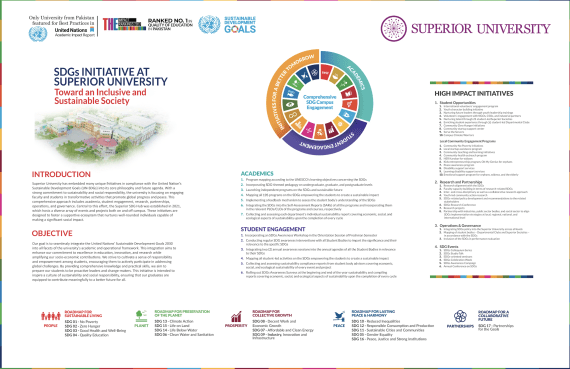
At Superior University, civic engagement is not treated as an autonomous activity but as a core institutional philosophy embedded across teaching, research, student development, and community partnerships. Our approach is anchored in a comprehensive Civic Engagement Framework (2023–2028), designed to develop socially responsible leaders and contribute meaningfully to the United Nations Sustainable Development Goals (SDGs).
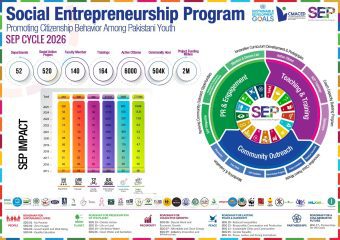
Our flagship initiative, the Social Entrepreneurship Program (SEP), integrates civic engagement directly into the academic curriculum through a mandatory 3-credit course, requiring each student to complete 96 hours of structured community engagement. To date, over 31,510 volunteers have been trained, contributing more than 3 million community service hours, implementing 2,685+ community development projects, and impacting over 2 million beneficiaries.
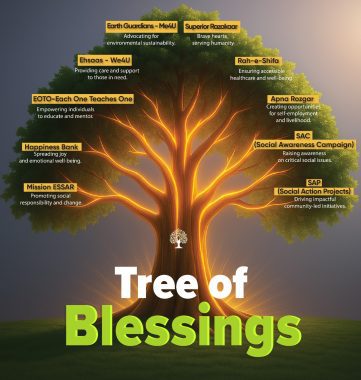
A central feature of our model is the “Tree of Blessings” (pictured below), a holistic ecosystem that connects diverse civic engagement initiatives under one unified framework. Each branch represents a thematic intervention area, including education (Each One Teach One), environmental sustainability (Earth Guardians), livelihood creation (Apna Rozgar), healthcare outreach (Rah-e-Shifa), disaster response (Mission ESSAR), and social awareness and action campaigns. This model ensures that student engagement is structured, scalable, and aligned with real community needs while fostering empathy, leadership, and problem-solving skills.
We have established strong collaborations with over 100 partner organizations, including NGOs, government bodies, and industry, to co-create sustainable solutions. In parallel, our students actively lead civic awareness and advocacy campaigns addressing critical issues such as climate change, gender inclusion, health awareness, and education equity.
Our commitment extends to research and global engagement, where we align community-based research with national priorities and international frameworks. Through partnerships with global platforms and alignment with the SDGs, we ensure that our initiatives contribute to both local impact and global discourse.
To ensure accountability and sustainability, we have institutionalized impact measurement systems, including the SDGs framework, community feedback mechanisms, and structured evaluation frameworks. Civic engagement outcomes are also integrated into institutional policies, quality assurance systems, and performance evaluations.