“En Libertad de Educación” (ELEDUC) (Pontificia Universidad Católica de Chile, Chile)
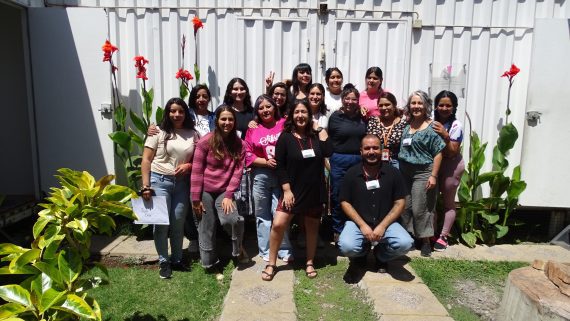
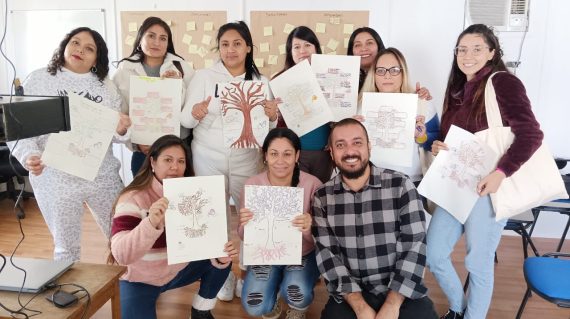
The “En Libertad de Educación” program (ELEDUC) seeks to prepare, support, and accompany women who are or have been deprived of liberty in their process of entering and remaining in Higher Education. This is carried out through various workshops, tutoring sessions, and mentoring activities focused on the needs and challenges that participants may encounter. Upon completion of their degree programs, participants receive career placement support and professional integration accompaniment.
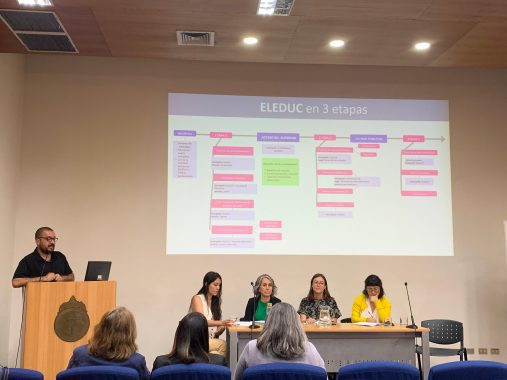
Stages and Lines of Action
The program consists of three stages:
Stage 1: Preparation for Higher Education
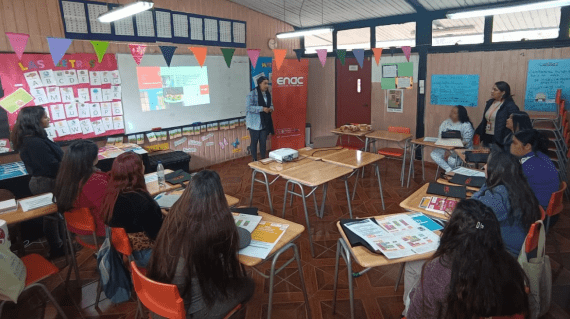
Objective: To provide opportunities for academic learning and the development of transversal competencies, achieving curricular goals and strengthening participants’ readiness for Higher Education. This stage refers to the process of preparing participants to access Higher Education. It encompasses the lines of action of academic leveling and socio-emotional support. This stage has a total duration of one year, during which different workshops are held three days per week. All workshops are grounded in an adult education framework and guided by 21st-century skills development principles. These are also complemented by academic tutoring and vocational guidance sessions.
- Mathematical thinking workshop
- Communicative skills workshop
- Digital skillsworkshop
- Emotion management and life project workshop
Stage 2: Retention in Higher Education
Objective: To support participants’ continued enrollment in Higher Education from a comprehensive perspective that encompasses their life and vocational projects, reducing the likelihood of withdrawal from their academic programs. This stage focuses on the retention of participants throughout their time in Higher Education, working primarily on the lines of action of academic and socio-emotional support in Higher Education. This stage spans the full duration of the degree program and involves:
- Academic Tutoring
- Digital Skills Workshops
- Socio-Emotional Support for Retention
- Internships and Field Visits
Stage 3: Career Placement and Professional Integration Support
Objective: To facilitate participants’ entry into the labor market by establishing strategic partnerships with companies and institutions in the socio-labor sphere.
This stage focuses on participants’ graduation from Higher Education and their subsequent integration into the professional world, addressing the lines of action of Socio-Emotional Support and Career Placement, with the ultimate goal of enabling participants to work in their field of study. The activities developed include:
- Employability Workshops
- Socio-Emotional Support
- Engagement with Support Networks
Since the program began, ten women have successfully completed their higher education degrees and are now employed in their respective fields of study. An additional five students are expected to graduate this year. Meanwhile, twenty participants continue their studies with support from the program, and another fifteen are preparing, with the hope of enrolling in higher education programs in 2027.
“We are deeply honored and grateful to receive this recognition. ELEDUC is a collaborative project that seeks to place the university at the service of one of society’s most complex challenges: the social reintegration of formerly incarcerated women. We do this through the commitment of our faculty, staff, and students, working in close collaboration with civil society organizations and Gendarmería de Chile. This initiative is also a concrete expression of how UC Chile, as a complex university, is called to connect teaching, research, and public engagement in ways that contribute meaningfully to the transformation of society. ELEDUC shows how this mission comes to life when the university works with others, listens to real social needs, and mobilizes its community in service of human dignity and the common good. We extend our sincere gratitude to the Talloires Network for this opportunity. This award inspires us to continue strengthening and expanding this work.”
— Francisco Gallego, Provost for Institutional Management UC