Project Luminary (Parami University, Myanmar)
Origin Story
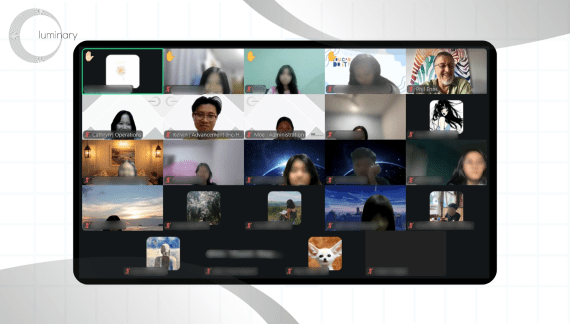
Project Luminary began not simply because students saw a problem, but because they had lived through it themselves. Before joining Parami University, the founders had personally experienced the uncertainty of navigating higher education pathways from within Myanmar’s disrupted and unequal education landscape.
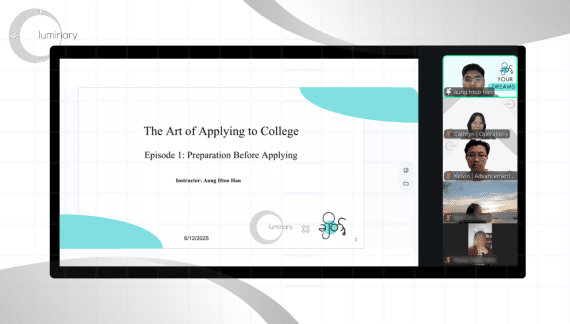
The original idea emerged when one founder, after gaining admission to Parami University, became passionate about encouraging other young people to apply as well. What began as informal encouragement to friends and peers gradually expanded into a larger question: if students needed guidance for Parami, might they also need support for other universities, scholarships, and learning opportunities? And if there was a gap between interrupted schooling and future higher education, could students themselves create an interim space for learning, reflection, and critical thinking?
When Parami University later offered a civic engagement grant opportunity, the founder gathered other like-minded students and transformed this idea into a one-time student-led project. The strong response from applicants, the enthusiasm of participants, and the positive feedback from the first programme gave the team the confidence to continue. What began as one student’s desire to share a pathway became a wider youth-led civic education initiative.
What Makes Us Distinct
Project Luminary is not only a higher education access programme. It is a student-led effort to rebuild spaces for learning, confidence, and civic imagination in a context where formal education pathways have been deeply disrupted. The programme’s distinctiveness lies in three areas:
- Lived-experience leadership: The founders were not distant observers of the problem. They had personally navigated the uncertainty of Myanmar’s disrupted education system before entering Parami University.
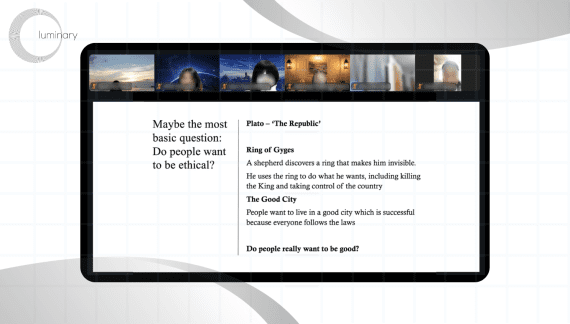
- Two-cycle annual model: Project Luminary combines higher education access and critical social engagement with applied skill-building, including research, digital literacy, AI knowledge, financial literacy, and other areas based on community needs.
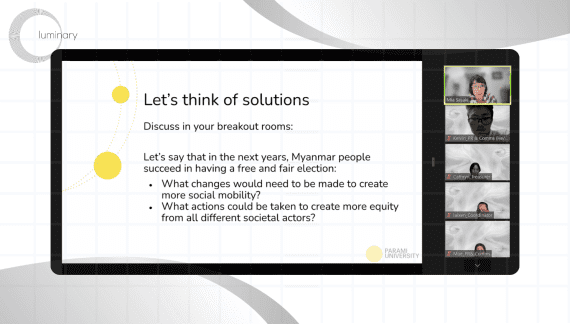
- Learning as mutual exchange: Participant feedback showed that young people wanted more peer engagement, not only lectures. This helped shape Project Luminary’s pedagogy: learners are not passive recipients, but active contributors whose experiences deepen the learning space for everyone.
- Founded: December 2023
- Total applications received: 210 (Pilot Programme: 110, Pathways & Perspectives: 60, LARC: 40)
- Direct youth beneficiaries: 96
- Age range: 16–25
- Community members engaged overall: 121
- Programme cycles completed: 3
- Countries/contexts reached: Myanmar, Thailand, Malaysia, Cox’s Bazar refugee camp in Bangladesh
- Myanmar regions represented: Yangon, Mandalay, Bago, Magway, Shan, Ayeyarwady, Mon, Kayin, Kayah, Tanintharyi
- Student/youth leaders and contributors: 10
- Faculty/staff contributors: 18
- Guest speakers and instructors: 15
- Cost to participants: free of charge

“While we are deeply honoured by this recognition and proud of what Project Luminary has accomplished so far, we also receive this award with humility. Across Myanmar and our region, there are many grassroots initiatives, community organisations, and youth-led efforts creating meaningful change under extraordinary difficult circumstances, such as ours. Many of them may never receive international recognition, despite the profound impact they have on people’s lives and communities.
We therefore see this award not only as a recognition of Project Luminary, but also as a tribute to this wider community of people and initiatives as well as many of our Burmese youths who continue to learn, lead, and imagine better futures despite increasing challenges both at home and abroad. We do not take this privilege for granted.”
— Kaung Myat Phyo (Kelvin), Project Lead and Advancement Lead