The University of Baltistan Skardu (Pakistan)
The University of Baltistan Skardu (UoBS), Skardu is a premier public-sector higher education institution established on 25 August 2017 under the University of Baltistan Skarud Order, 2016. As the only public-sector university in the Baltistan region, the University is committed to providing quality, accessible, and inclusive higher education for students from diverse social, cultural, and geographical backgrounds. The institution upholds the principles of equality and inclusivity by offering educational opportunities without discrimination based on gender, religion, race, ethnicity, creed, class, color, or domicile.
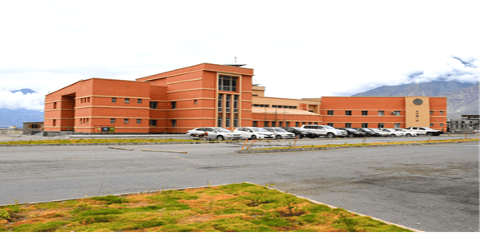
The foundation of the University can be traced back to 2011, when it began functioning as a sub-campus of Karakoram International University. Initially, the campus comprised four academic departments: Computer Science, Modern Languages, Business Management, and Educational Development. In 2017, the establishment of the Department of Biological Sciences marked a significant milestone, paving the way for the University’s transition into an independent institution and expanding its academic portfolio.
Since its inception as an autonomous university, the University of Baltistan Skarud has experienced remarkable growth in academic programs, student enrollment, research activities, and infrastructure development. Today, it offers a wide range of undergraduate and postgraduate degree programs across diverse disciplines, including Computer Science, Modern Languages, Biological Sciences (Botany and Zoology), Mathematics, Business Management, Tourism and Hospitality Management, Chemistry, Environmental Science, Educational Development, and Archaeology & Heritage Studies. In line with emerging scientific and technological trends, the University is also planning to introduce new academic programs in Bioinformatics and Biotechnology, which are expected to commence within the next one to two years.
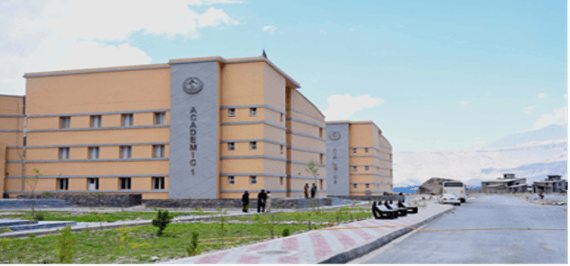
The University of Baltistan Skardu serves as a catalyst for educational, social, and economic development in one of Pakistan’s most geographically remote yet culturally rich regions. By offering quality higher education locally, the University has sig
nificantly reduced educational barriers for students who previously had limited access to advanced academic opportunities. It also attracts students from other regions of Pakistan and has the potential to become an academic destination for international students interested in mountain studies, environmental sciences, tourism, cultural heritage, and sustainable development. Learn more.